
Dean Nicola’s Epiphany Blog
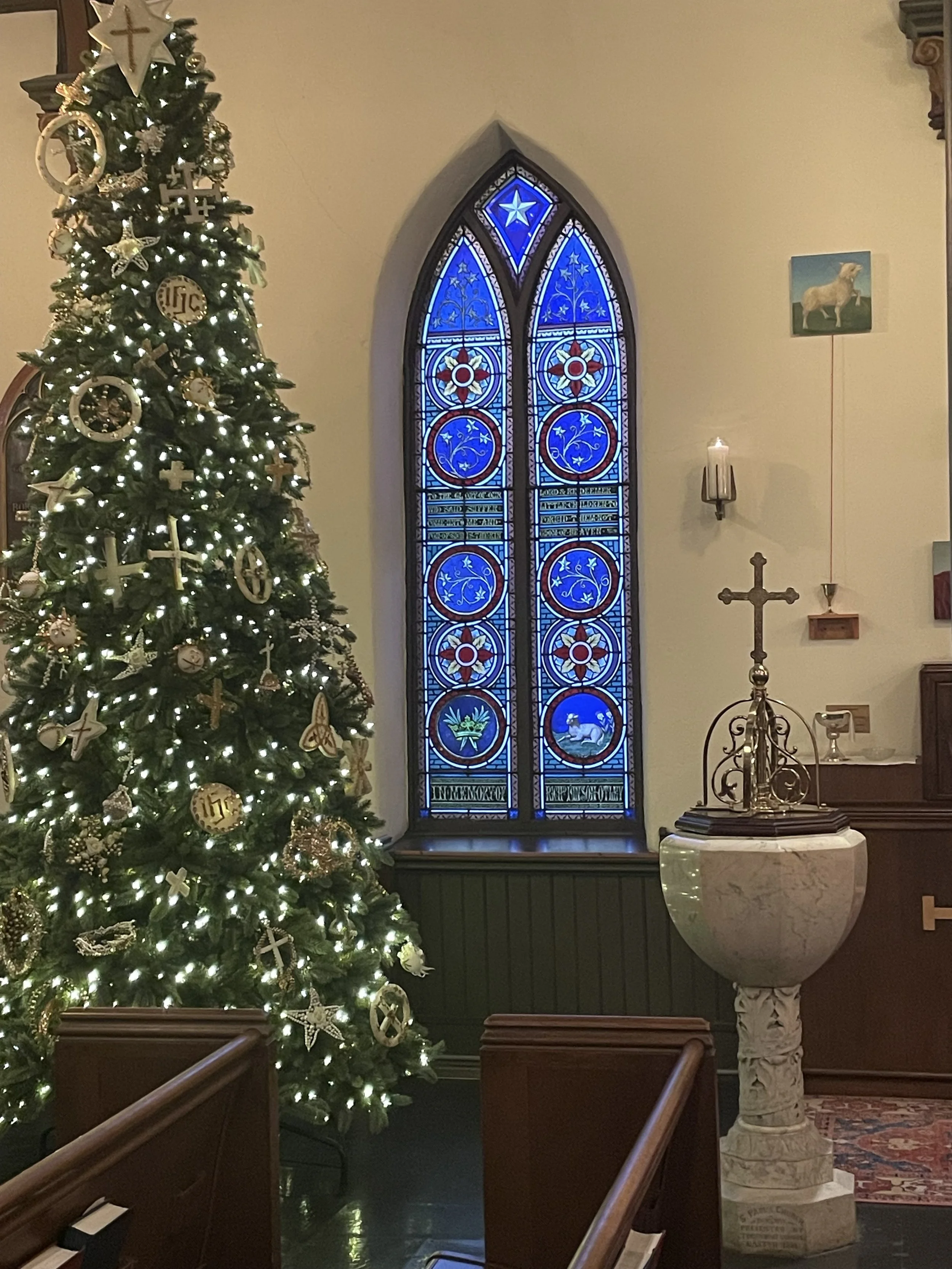
How lovely St. Paul’s appears when morning light graces an east window, on January 4, Christmas II. Spot the many stars in this photograph! Credit: Nicola Chase.
The story of the coming of the Magi, wise men, that we celebrate on the Feast of the Epiphany, January 6, is a story of pilgrimage, of wonder, of praise, of worship. The Greek word epiphaneia (ἐπιφάνεια) means "appearance," "manifestation," or "coming to light," referring to a divine revelation or showing forth, especially of a deity. From Celebrating Liturgical Time, “Epiphany brings ritual closure to Christmas. [It] shifts the balance from the incarnation of God seen in relationship to the nativity of Jesus, to the incarnate one being manifest in new ways as God’s anointed one whom we will come to know as teacher, healer, miracle worker, and ultimately as the Crucified and Risen One. Epiphany is also about looking forward, about beginnings, about what is still to come.”
House Blessings
Epiphany is a good time to invite God’s blessing on your home for the coming year. I have enjoyed offering these blessings on many homes in recent years, ranging from a simple prayer and chalking at the door to a full tour candlelit procession followed by Holy Eucharist in your living room!. Please be in touch to arrange for a house blessing: dean@stpaulsdm.org.
A Comment on Awe
I am not a consistent listener, but I am a fan of The Hidden Brain hosted by Shankar Vedantam and aired weekly on Iowa Public Radio. I might catch a snippet as I drive here or there. It is always interesting. A recent edition titled The Reset Button discussed the human experience of awe and its effects. We-feel awe through vast activities of the natural world – storms, earthquakes, avalanches and the like – or by gazing up into a grove of magnificent trees, or by witnessing a desert sunrise in ad hoc community with others gathered to observe it. In a survey of people from 26 countries all over the world, researcher Dacher Keltner was surprised to find that “the most universal and the most common [experience of awe] was the goodness or moral beauty of other people … neighbors and strangers and grandmothers … and roommates that almost on a weekly basis are triggering us to feel like people are good, and I could be inspired by that.” This finding reminded me of the words written in the Letter to the Hebrews which encourage us to inspire one another for good. May it be so!
“And let us consider how we may spur one another on toward love and good deeds, not giving up meeting together, as some are in the habit of doing, but encouraging one another—and all the more as you see the Day approaching.” Hebrews 10:24-25